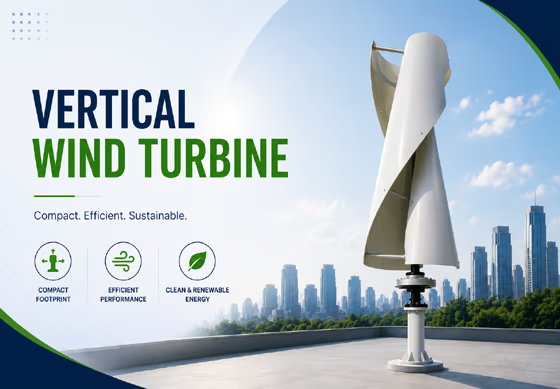
Compact, efficient, and built for the future, Nexara’s vertical wind turbine delivers clean renewable power with a smaller footprint, smart design, quiet operation, and dependable performance. Vertical Wind Turbines (VWTs) offer an innovative approach to generating electricity from wind while providing flexibility for locations where conventional horizontal-axis wind turbines may not be practical. Nexara Energy provides modern vertical wind energy solutions designed for residential, commercial, industrial, infrastructure, and hybrid renewable energy applications.
A vertical wind turbine is designed with its main rotor shaft positioned vertically, allowing the system to capture wind from different directions without requiring the entire turbine to rotate toward the wind. This unique configuration makes vertical wind turbines particularly suitable for areas where wind direction changes frequently or where space and visual considerations are important.
Innovative Wind Energy Technology
Traditional wind turbines generally use horizontal blades that rotate around a horizontal shaft. Vertical wind turbines use a different design, with blades arranged around a vertical axis. This configuration can provide several practical advantages depending on the installation environment, turbine design, and wind conditions.
Nexara Energy focuses on delivering efficient and reliable vertical wind energy solutions that can complement solar power and other renewable energy technologies. By combining different sources of clean energy, customers can create a more balanced renewable energy system capable of generating electricity under varying environmental conditions.
Designed for Changing Wind Directions
One of the key characteristics of vertical wind turbines is their ability to operate with wind arriving from multiple directions. Because the rotor is vertically oriented, the system does not necessarily require the same type of directional alignment mechanism used by many conventional horizontal-axis turbines.
This feature can be particularly useful in urban environments, industrial areas, coastal regions, rooftops, open commercial properties, and other locations where wind direction may be inconsistent. Proper site assessment remains essential because the performance of any wind turbine depends on factors such as wind speed, turbulence, height, surrounding structures, and local environmental conditions.
Compact and Space-Efficient Solution
Space availability is an important consideration when developing renewable energy projects. Vertical wind turbines can offer a compact configuration that makes them suitable for selected locations where traditional turbine designs may be difficult to accommodate.
Their relatively compact footprint can make them useful for distributed energy applications, including commercial buildings, industrial facilities, campuses, roadside infrastructure, telecommunications installations, and hybrid renewable energy projects. The exact size and configuration can be selected according to the available space and expected energy requirements.
Suitable for Urban and Commercial Applications
Vertical wind turbines can be considered for applications where renewable energy generation needs to be integrated into developed environments. Their distinctive design can provide an alternative to conventional wind turbines for selected urban and commercial locations.
Businesses can explore vertical wind technology as part of their sustainability initiatives while reducing dependence on conventional electricity sources. When properly designed and installed, wind generation can contribute to a site's overall renewable energy portfolio and support long-term energy management objectives.
Low-Maintenance Renewable Energy
Maintenance requirements are an important factor when selecting any renewable energy system. Vertical wind turbine designs can be engineered with accessible components and durable materials to support reliable long-term operation.
Nexara Energy emphasizes quality equipment, proper installation, preventive maintenance, and performance monitoring. Regular inspections help identify potential issues and maintain the system's operating efficiency. The actual maintenance requirements depend on the turbine model, operating environment, installation conditions, and system specifications.
Hybrid Solar and Wind Energy Systems
One of the most valuable applications of vertical wind turbines is their integration with solar energy. Solar panels generate electricity primarily during daylight hours, while wind resources can be available during different times of the day and night. Combining these technologies can help diversify renewable energy generation.
A hybrid solar-wind system can include solar panels, vertical wind turbines, battery energy storage, inverters, and intelligent energy management systems. During periods of strong solar generation, excess electricity can be used to charge batteries or support connected loads. When wind conditions are favorable, the vertical turbine can contribute additional renewable power.
This integrated approach can improve the utilization of renewable resources and provide greater flexibility for customers looking to develop a more resilient clean energy system.
Battery Storage Integration
Energy storage can further enhance the benefits of a vertical wind turbine system. Battery Energy Storage Systems (BESS) can store surplus renewable electricity and make it available when generation is lower or energy demand increases.
Nexara Energy can help integrate wind generation with battery storage and other energy technologies according to project requirements. Smart energy management can coordinate renewable generation, storage, and electricity consumption to improve overall system performance.
Applications of Vertical Wind Turbines
Vertical wind turbines can be considered for a wide range of applications, including residential properties, commercial buildings, industrial facilities, educational campuses, resorts, agricultural sites, telecom infrastructure, street lighting, remote installations, and hybrid renewable energy projects.
They may also be suitable for microgrid applications where multiple renewable energy sources are combined with energy storage and intelligent power management. The appropriate application depends on the site's wind resource, energy requirements, available space, local regulations, and project objectives.
Professional Project Development
Successful wind energy installation begins with proper planning. Nexara Energy evaluates factors such as site conditions, wind characteristics, energy demand, installation location, electrical infrastructure, and future expansion requirements before recommending a suitable solution.
Our approach can include system planning, equipment selection, engineering, installation, commissioning, monitoring, and maintenance support. This end-to-end approach helps customers develop renewable energy systems that are practical, reliable, and aligned with their long-term energy goals.
A Sustainable Energy Future
Vertical wind turbines represent an exciting opportunity to expand the use of distributed renewable energy. Their ability to work with changing wind directions, compact configuration, and compatibility with solar and battery storage makes them an interesting option for modern clean energy projects.
Nexara Energy, we are committed to developing future-ready renewable energy solutions that combine innovation, efficiency, and sustainability. By integrating vertical wind technology with solar power, energy storage, and smart energy management, we help businesses and communities move toward cleaner electricity generation and greater energy independence.
Whether you are exploring a standalone vertical wind turbine, a solar-wind hybrid system, or a complete renewable energy solution, Nexara Energy can help you plan a system designed around your energy needs, site conditions, and long-term sustainability goals.